

Your dentist at Schwanenplatz
Treating teeth grinding in Lucerne
Do you wake up with tense jaw muscles or a headache? Teeth grinding at night is often the cause. At our dental practice on Schwanenplatz, we look into possible causes and protect your teeth with a custom-made night guard.
Federal Certified Dentist
The practice at a glance
Opening hours
- Monday
- 08.00 to 12.00, 13.15 to 17.00
- Tuesday
- 07.30 to 12.00, 13.15 to 16.30
- Wednesday
- 08.00 to 12.00, 13.15 to 17.00
- Thursday
- 10.00 to 12.00, 14.00 to 19.00
- Friday
- 08.00 to 12.00
Emergency services
There may be times when you need a dentist in Lucerne in an emergency. That’s why we’re here for you in such situations.
+41 41 410 14 84What is teeth grinding (bruxism)?
With teeth grinding, known medically as bruxism, the upper and lower teeth unconsciously rub or press against each other. This creates much higher forces than normal chewing. Over time, it can put strain on the teeth, the chewing muscles and the jaw joints.
Teeth grinding most often happens at night. Some people also clench their teeth during the day, for example when concentrating or under pressure. Stress and inner tension are considered common triggers. Sleep disorders, an uneven bite or certain medications can also play a role.
At our dental practice in Lucerne, we protect your teeth from further wear and discuss with you which causes may apply in your case.
Teeth grinding symptoms: how can you recognise bruxism?
Teeth grinding often goes unnoticed for a long time. Look out for the following signs:
- Flattened or worn-down chewing surfaces and biting edges
- Tense or painful chewing muscles in the morning
- Headaches, especially at the temples, or a stiff neck
- Teeth that are sensitive to cold, heat or sweet things
- Hairline cracks in the enamel, chipped tooth edges or loose fillings
- Clicking, grinding or pain in the jaw joint
- Your partner hears you grinding your teeth at night
Many of these signs develop gradually. At check-ups, we often see signs of wear before you notice any symptoms yourself.
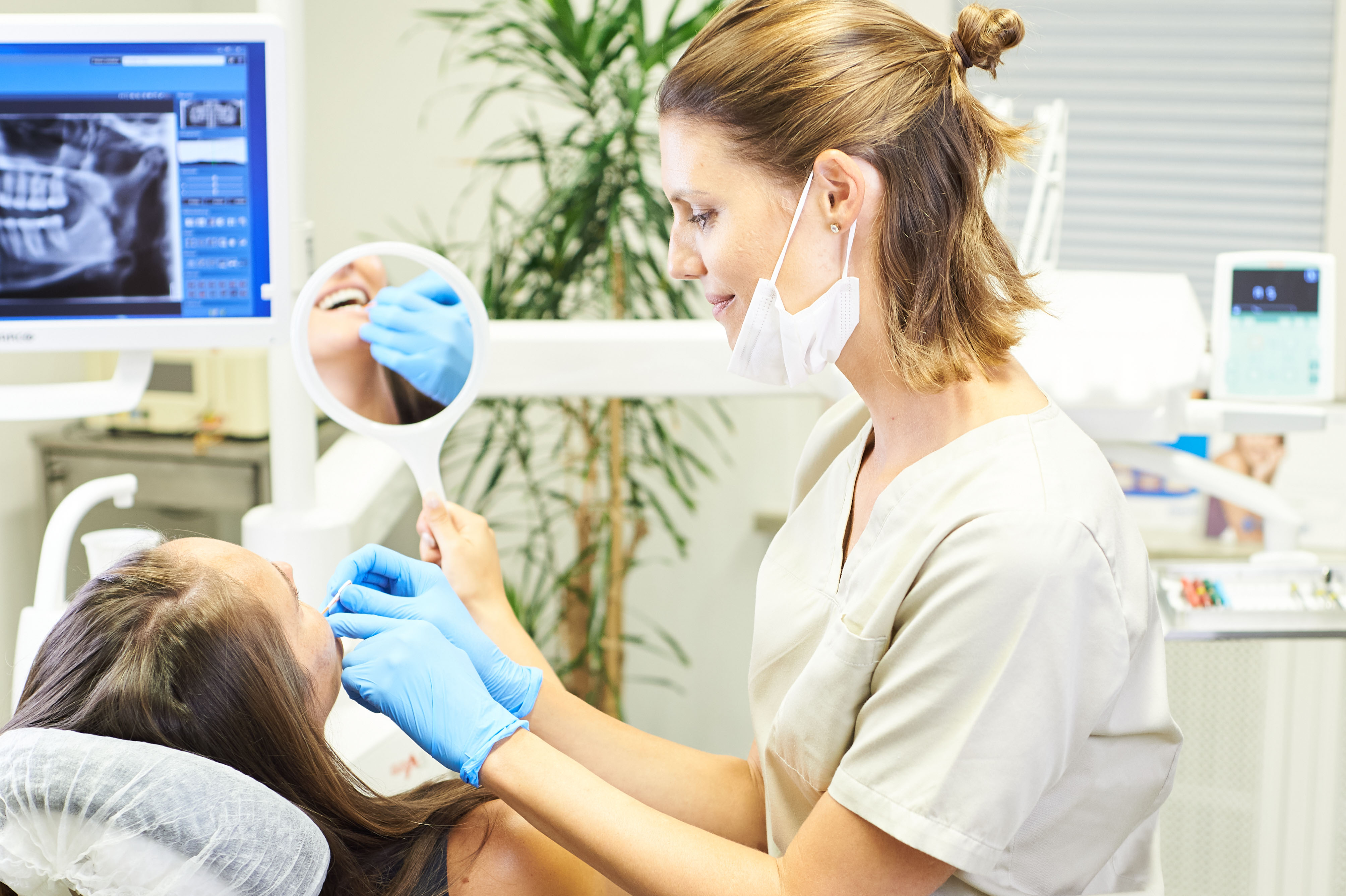
The night guard
The thin splint made of clear plastic is shaped to fit your teeth. It sits firmly and is worn at night.
Treating teeth grinding in Lucerne
The most important step is a custom-made splint against teeth grinding. It spreads the forces evenly and stops the teeth from rubbing directly against each other. This protects enamel, fillings and crowns and can relieve the muscles and jaw joints.
If misaligned teeth contribute to grinding, we discuss with you whether a correction makes sense, for example with braces.
Examination and consultation
We examine your teeth, chewing muscles and jaw joints and talk about your symptoms, your sleep and possible triggers.
Impression or digital scan
Your jaw is captured precisely. In many cases, this is done with a digital scan, without an impression tray.
Making the splint
In the dental laboratory, your splint is made from sturdy, clear plastic to fit your teeth exactly.
Fitting and check-ups
We fit the splint, adjust it to your bite and explain how to use and care for it. At check-ups, we check its fit and wear.
Your practice team at Schwanenplatz
Dr. med. dent. Claude Rast and our team take time to answer your questions. We explain what the examination shows and which steps we recommend.
Dr. med. dent. Claude Rast
Federal Certified Dentist

Michelle Imfeld

Nathalie Stöckli
Prophylaxis Assistant

Alisa Aganovic
Dental assistant

Ana Maria Grange
Dental assistant i.T.

Stella-Joy Badon
How much does a night guard cost?
The cost depends on the findings and the type of splint. Key factors include:
- Examination and consultation
- Impression or digital scan, and the fitting
- The work of the dental laboratory
Whether supplementary insurance covers part of the cost depends on your policy. We discuss the expected costs with you in advance and can provide a cost estimate on request.
What else helps against teeth grinding?
The splint protects your teeth from the effects of grinding. To reduce the grinding itself, other measures can be helpful:
- Reducing stress, for example with relaxation exercises or physical activity
- Paying attention during the day not to clench your teeth
- Physiotherapy for tense jaw and neck muscles
- Avoiding caffeine, alcohol and nicotine in the evening
We discuss with you which measures are suitable in your case.
What our customers say about us
What our patients say
Great care. They take the time to explain everything and walk you through every step. The treatment is also very attentive and gentle. I highly recommend this practice to anyone who doesn't like going to the dentist! Thank you so much!
A truly wonderful dentist! The entire team is very friendly, professional, and always well-organized. You feel right at home from the moment you walk in. The office is modern and beautifully decorated—the view of Lucerne is a real highlight. I highly recommend it!
I am very satisfied with Dr. Rast’s dental practice. I am always greeted warmly and treated professionally. I also think the location is ideal. The office is tastefully decorated, and the soft background music creates a pleasant atmosphere.
Advice on teeth grinding
Do you suspect you grind your teeth at night? We check whether your teeth already show signs of wear and discuss the right protection with you.
Useful Information for You
Frequently asked questions about teeth grinding and night guards
What helps against teeth grinding at night?
A custom-made night guard protects your teeth by stopping them from rubbing directly against each other. Reducing stress and avoiding caffeine and alcohol in the evening can also help. We discuss with you which measures make sense.
Does a splint stop teeth grinding?
The splint does not stop the grinding, but it protects your teeth, muscles and jaw joints from its effects. Tension often eases as a result. To address the causes, other measures such as stress reduction or physiotherapy can be helpful.
How long do I need to wear the splint?
The splint is usually worn every night for as long as the grinding continues. If you also clench your teeth hard during the day, wearing it during the day as well can make sense. We decide this with you individually.
How long does a night guard last?
A well-cared-for splint usually lasts several years. With heavy grinding, it wears out faster. At check-ups, we check that it still fits well and gives enough protection.
Is a splint from the pharmacy enough?
Ready-made splints do not fit your teeth exactly and can affect your bite unfavourably. A custom-made splint is adjusted to your teeth and your bite.
Can teeth grinding cause headaches?
Yes, it can. Clenching and grinding put a heavy load on the chewing muscles. This can contribute to headaches at the temples, a stiff neck or jaw joint problems.
Can braces help with teeth grinding?
If misaligned teeth or an uneven bite contribute to grinding, correcting them with braces can make sense. We clarify whether this applies to you at the examination.
Do children grind their teeth too?
Yes, teeth grinding is common in children, especially while their teeth are changing. It often stops over time. At check-ups, we make sure their teeth are not being damaged.
How do I clean my night guard?
Rinse the splint in the morning with cold or lukewarm water and clean it with a soft toothbrush without toothpaste. Store it dry in its case. Hot water can deform the plastic.