
Crowns and bridges
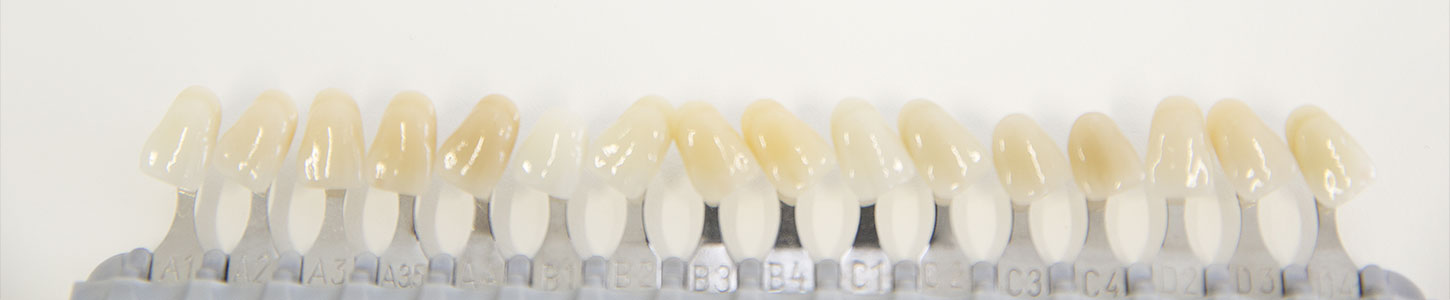
Reconstructions that cannot be removed by the patient also offer the best comfort / safety due to their strength! Traditionally, tooth-coloured crowns and bridges made of ceramic belong to this category. As a basic principle, we strive to avoid any crown or bridge whenever possible and to preserve the patient’s own teeth. In certain situations, however, a crown or bridge can still be the sensible choice. If there is a gap in the row of teeth, the use of implant supported crowns and bridges has also proven successful.
When is a crown/bridge necessary?
- For very large tooth substance defects (caries/replacement of old amalgam fillings)
- In case of fractures (fracture) of the natural crown
- For the stabilization of root-treated teeth (risk of breakage)
- In case of shape defects (e.g. due to amelogenesis disorders / heavy wear etc.)
- For strong discolourations from the inside
- Unpleasant, inharmonious tooth position
- Tooth gaps that cannot be treated with implants
- Replacement of an existing crown/bridge if it is no longer aesthetically or functionally sufficient
A healthy foundation (periodontium / tooth nerve) is a prerequisite for the integration of crowns and bridges.
The aim here is to restore the health, function and aesthetics of the affected tooth.
Process
The tooth to be restored is ground down so that there is sufficient space for the framework and the veneering of the new crown.
Using an exact impression, the situation is transferred to the dental laboratory. Here, the crown / bridge is manufactured individually for you. In many cases, the dental impression can be taken digitally and the crown is fabricated and inserted directly in the practice in a single session. The very accurately fitting and aesthetic ceramic workpieces are then cemented / glued to the tooth stumps and cannot be removed afterwards. This creates the feeling of the reconstruction being a separate tooth. Optically, “crowns and bridges” are only distinguishable from natural teeth by qualified personnel.
Cooperation with an experienced dental laboratory and correct pre-treatment of the corresponding teeth are decisive for successful treatment.
Costs for crowns and bridges
The costs for a crown or a bridge are made up as follows: possible pre-treatment (augmentation / root canal treatment)
- dental work
- external work of the dental laboratory
We are happy to advise you individually in a personal conversation.
Useful Information for You
Questions About Crowns and Bridges
Yes, in most cases this is possible using the so-called CEREC (CAD/CAM) method. A camera captures the current condition. Using the appropriate software, the new filling or crown can be designed on the computer and then milled from a ceramic block using a CNC milling machine. This piece is then lightly refined by hand and carefully bonded to the patient’s tooth during the same appointment. Advantages: just one appointment, no impression, no temporary restoration
In rare cases, a conventional impression and fabrication of the crown in a dental laboratory may be necessary due to the deep location of the preparation margin or considerations regarding material selection or aesthetics.
Whether a gap should be closed must be assessed on a case-by-case basis. The key factor is whether the patient has enough pairs of teeth—even without a replacement—to break down food sufficiently. Over time, the teeth adjacent to the gap will tilt toward it (dental arch collapse), and the tooth in the opposite jaw that corresponds to the gap may grow out of place because it seeks contact with a “counterpart.” In extreme cases, this can cause disruptive contact when the jaws move against each other, or the tooth may bite into the gum.
Of course, for aesthetic reasons, it makes sense to restore gaps in the visible area.
In most cases, several options are available for closing the gap:
- Conventional bridges (if adjacent teeth would benefit from a new restoration or if surgical procedures cannot or should not be performed).
- Front teeth can often be restored with adhesive bridges, which is a very minimally invasive solution, especially for young patients.
- Implants, which serve as artificial roots, onto which crowns or dentures can be attached.
Dental implants are artificial tooth roots made of titanium or zirconia that are surgically placed into the bone. If there is not enough bone, a bone graft can often make implantation possible.
These artificial roots can stabilize dentures and anchor crowns or bridges.
A crown is necessary when a tooth is severely damaged and can no longer be adequately stabilized with a standard filling. This can be the case, for example, after extensive tooth decay, a large old filling, a broken tooth, or root canal treatment.
The crown encases the tooth like a protective shell, restoring its shape, stability, and function. At the same time, it can also be customized to match the appearance of the natural teeth.
Whether a crown is appropriate depends on how much healthy tooth structure remains and how much stress the tooth is under during chewing.
A crown restores a single tooth. It is used when the tooth is still present but is severely damaged or weakened.
A bridge, on the other hand, replaces one or more missing teeth. To do this, the adjacent teeth are usually used as abutments and fitted with crowns. The artificial tooth that closes the gap is placed between these crowns.
In short: A crown stabilizes an existing tooth. A bridge replaces a missing tooth.
With proper care, crowns and bridges can last for many years. Their exact lifespan depends on various factors, such as the material used, oral hygiene, the force exerted while chewing, the condition of the adjacent teeth, and whether the patient grinds or clenches their teeth.
Thorough cleaning at home and regular checkups at the dental office are important. In particular, the areas where the tooth meets the crown or bridge must be well maintained to prevent cavities or inflammation from developing there.
The team at the Zahnarztpraxis am Schwanenplatz regularly checks crowns and bridges and provides you with tips on proper care.
Not always. In many cases today, the situation can be digitally captured. This involves scanning the tooth without taking a traditional impression using impression material.
Depending on the situation, a crown can be designed and fabricated using modern CEREC technology. This often allows for treatment to be completed in a short amount of time. Whether a digital impression or a traditional impression is appropriate depends on the initial situation, the affected tooth, and the planned restoration.
You can find more information on our CEREC page.
There is no one-size-fits-all answer to whether a bridge or an implant is more suitable. Both solutions can be appropriate, depending on the condition of the mouth, the condition of the adjacent teeth, the amount of available bone, your overall health, and your personal preferences.
A bridge can be a good solution if the adjacent teeth already have extensive fillings or need crowns. In that case, they can be stabilized and used as abutments at the same time.
An implant replaces the tooth root and does not require grinding down the adjacent teeth. However, it does require sufficient bone and a surgical procedure.
At the Zahnarztpraxis am Schwanenplatz, we’ll work with you individually to determine which solution is best for your missing tooth.