
Parodontology

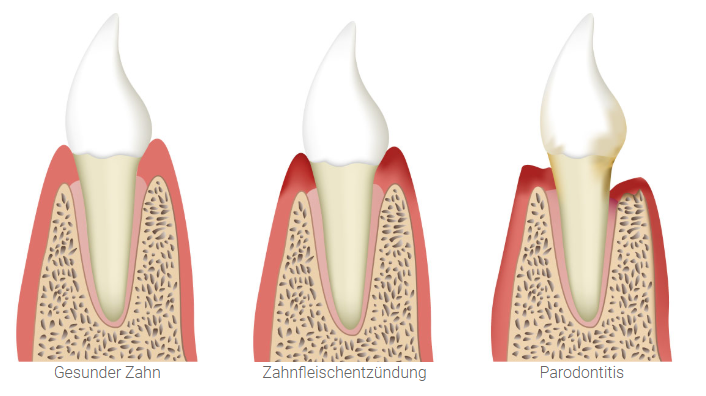
Gum inflammation (gingivitis)
If plaque is insufficiently removed, the gums become inflamed. Swelling, redness and increased “gum bleeding” develops. Hormonal changes (e.g. pregnancy) and medication (e.g. epilepsy/immunosuppression) can also cause or intensify gingivitis.
The aim is to return this medical condition to a healthy state using professional tooth cleaning and oral hygiene instructions.
Dental bed inflammation (periodontitis)
Periodontitis is a contagious infectious disease of the periodontium. This disease destroys the fibers anchoring the tooth to the bone. In place of this fibrous apparatus, a “pocket” forms which is filled with bacteria and possibly releasing pus. If the disease remains undetected for a long time or is not treated, the periodontium’s shrinking process can progress so far that the tooth loosens and finally falls out.
The aim is to stop this process by removing as many bacterial deposits as possible. We show the patient how to optimally prevent the formation of new plaque by means of oral hygiene. In some advanced cases, surgical treatment, the use of laser or antibiotics may be indicated. Regular checks and dental hygiene sessions are decisive for the long-term success of periodontitis treatment.
Costs for gingivitis and periodontitis
The costs for prophylaxis or dental hygiene depend on the treatment time, whether x-rays are due and whether an examination by the dentist is indicated. If treatment by the dentist is indicated, we will be happy to inform you individually about the expected costs.
Useful Information for You
Questions About Periodontology
Periodontitis is a contagious infectious disease of the periodontium (gums) caused by bacteria. The fibers that anchor the tooth in the bone are destroyed. In place of this fibrous tissue, a “pocket” forms that is filled with bacteria and may drain pus. If this disease goes undetected for a long time or is left untreated, the deterioration of the periodontium can progress to the point where the tooth becomes loose and eventually falls out.
It is very difficult for a layperson to tell whether they have simple gum inflammation (gingivitis) or periodontitis. The disease is usually painless. A professional diagnosis by a dentist or dental hygienist is required. They can use appropriate instruments and tests to determine whether and to what extent your periodontal tissue is affected.
Signs of periodontitis include:
- swollen, reddened gums that bleed easily, possibly with pus
- the gum line may appear less “curved”
- loose teeth with increased mobility
- long-term gum recession → visual lengthening of the teeth possibly bad breath
To halt the process, the correct diagnosis must first be made, and then the appropriate treatment must be planned and carried out. In the vast majority of cases, regular dental hygiene and oral hygiene instruction can halt the process and maintain good oral health. In rare cases, further diagnostic and therapeutic measures are indicated (e.g., in the presence of a specific bacterial composition in the mouth, genetic predispositions, or certain systemic diseases or syndromes).
Regular preventive care is the foundation of healthy gums. Through professional cleanings and instruction, you’ll be equipped to maintain healthy gums on your own. Any damage is detected early, so that immediate steps can be taken to address it.
In addition, we recommend using a soft-bristled toothbrush (ideally a sonic toothbrush) that is used gently without pressure and does not rotate.
Daily flossing and the use of an antiseptic mouthwash also help keep the gum tissue healthy and firm.
Warning: Oral piercings can significantly increase the risk of localized gum recession.
Periodontitis is generally not “curable” in the traditional sense, but it can be treated very effectively and stabilized over the long term. The goal of treatment is to stop the inflammation, reduce the bacterial load, and prevent further loss of gum tissue and bone.
Early diagnosis by a dentist or dental hygienist is important. Afterward, tartar, plaque, and bacteria are removed, even from deeper gum pockets. In addition, daily oral hygiene at home and regular dental hygiene appointments play a central role.
Bone that has already been lost usually does not regenerate completely. However, with the right treatment and regular checkups, your natural teeth can often be preserved for a long time.
Bleeding gums are often a sign of gum inflammation. This is usually caused by plaque that accumulates along the gumline or between the teeth. The bacteria in the plaque irritate the gums, making them sensitive and causing them to bleed when you brush or floss.
It’s important to remember: Don’t stop brushing just because your gums are bleeding. Thorough yet gentle cleaning is especially important at this time. If the bleeding occurs regularly, lasts for a long time, or is accompanied by swelling, bad breath, or receding gums, you should see a dentist to determine the cause.
This allows for early detection of whether the issue is simply gum inflammation or the onset of periodontitis.
With periodontitis, regular checkups are especially important to keep the inflammation under control and prevent further loss of gum tissue and bone as much as possible.
How often a checkup or dental hygiene appointment is needed depends on the severity of the periodontitis, the depth of the gum pockets, your oral hygiene at home, and other risk factors. Appointments every three to six months are often recommended. If the condition remains stable, the intervals can be adjusted later.
Our team at Zahnarzt am Schwanenplatz will work with you to determine the appropriate interval on an individual basis and will support you over the long term in maintaining your oral health.