
Wisdom tooth removal
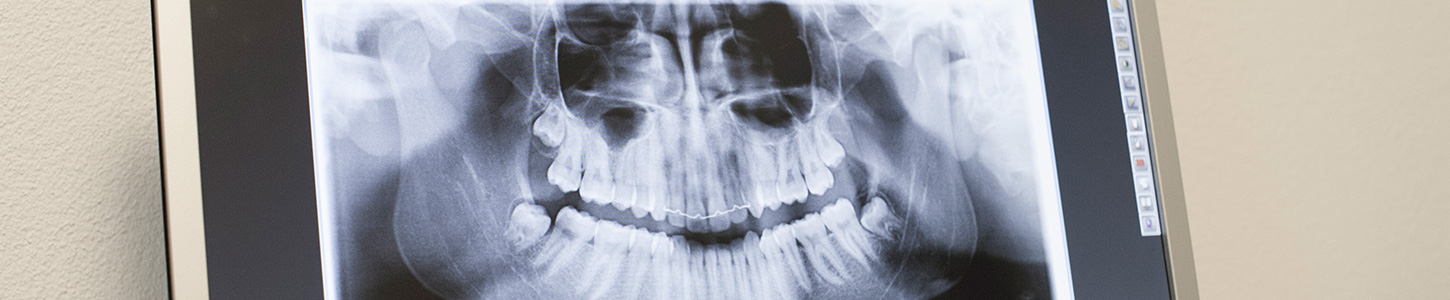
Simple to moderate tooth removal and operative tooth extractions (wisdom teeth) are routinely performed in our practice. We always strive to keep the surgical wound as small as possible in order to avoid complications and to achieve a better, faster healing process. In complex cases we consult local, experienced oral and maxillofacial surgeons. The reasons for a possible removal of wisdom teeth can be
prophylactic removal for customers up to approx. 25 years (to avoid the following diseases):
- local infection around the tooth crown (pericoronitis)
- nerve endangerment during later operation
- cysts formation
- caries
- inflammation of dental bed neighbouring tooth
- obstacle in case of breakthrough by other teeth
- resolution of the neighboring tooth (absorption)
- orthodontic reasons (tooth position)
Therapeutic removal
- local infection around the tooth crown (pericoronitis)
- nerve endangerment during later operation
- cysts formation
- caries
- inflammation of dental bed neighbouring tooth
- obstacle in case of breakthrough by other teeth
- resolution of neighboring tooth (resorptions)
- orthodontic reasons
- hearth restoration or before irradiation in the jaw area (by doctor’s order)
The above-mentioned problems occur when a wisdom tooth is completely or partially covered by mucous membrane and has too little space to penetrate completely and axially into the oral cavity. If the wisdom teeth have completely broken through axially and are healthy and easy to clean, they usually do not have to be removed. Often, wisdom teeth can be monitored regularly over a longer period of time by means of x-rays and clinical control in order not to miss the time for a possible removal. We would be happy to advise you personally in order to find the right approach for your individual situation.
Useful Information for You
Questions About Wisdom Tooth Removal
If wisdom teeth have erupted fully and properly aligned, are healthy, and can be cleaned easily, they generally do not need to be removed. Often, wisdom teeth can be monitored regularly over an extended period using X-rays and clinical examinations to ensure that the appropriate time for removal is not missed. We distinguish between prophylactic extraction and therapeutic extraction
Prophylactic extraction
for patients up to approximately 25 years of age (to prevent the conditions listed below):
- Local infection around the tooth crown (pericoronitis)
- Risk of nerve damage during a later surgical procedure
- Cyst formation
- Tooth decay
- Gum inflammation in the adjacent tooth
- Obstruction of the eruption of other teeth
- Resorption of the adjacent tooth
- Orthodontic reasons (tooth alignment)
Therapeutic extraction
- Local infection around the tooth crown (pericoronitis)
- Risk of nerve damage during subsequent surgery
- Cyst formation
- Tooth decay
- Gum inflammation in the adjacent tooth
- Obstruction of the eruption of other teeth
- Resorption of the adjacent tooth
- Orthodontic reasons
- Focal decontamination or prior to radiation therapy in the jaw area (as directed by a physician)
The problems listed above occur primarily when a wisdom tooth is completely or partially covered by mucous membrane and lacks sufficient space to erupt fully and properly aligned into the oral cavity.
After a surgical tooth extraction, you should expect swelling to increase over the course of 3 days. During this time, physical exertion (which raises your heart rate and blood pressure) is prohibited, as it can lead to even more severe swelling, pain, secondary bleeding, or other complications with wound healing. Depending on the procedure, you can resume light, steady physical activity afterward. In general, however, it is highly advisable to wait about a week before resuming sports.
- The surgical site should not be mechanically cleaned with a toothbrush until the stitches are removed. For disinfection, you will typically be given 0.2% chlorhexidine digluconate mouthwash, which you should use twice a day for 1 minute.
- If bleeding occurs, press a gauze pad firmly against the wound for 30 minutes.
- Keep your head elevated for the first 2 nights and do not lie on the side where the surgery was performed.
- Avoid physical exertion for 3 to 7 days.
- Do not smoke, drink alcohol, or consume coffee.
- Apply a cold pack or moist compresses.
- Take anti-inflammatory and pain-relieving medications as directed by your dentist.
- Eat soft foods.
- Minimize talking, laughing, and yawning.
- Homeopathic and herbal remedies can be used as a supplement.
- If you experience a fever, difficulty swallowing, or difficulty opening your mouth after the third day, contact your dentist immediately.
Your dentist will provide you with detailed information after the procedure and give you a flyer.